Anúncios
Water scarcity is reshaping modern agriculture, pushing farmers worldwide to adopt innovative techniques that maximize crop yields while minimizing water consumption and environmental impact.

🌾 The Growing Water Crisis in Agriculture
Agriculture accounts for approximately 70% of global freshwater withdrawals, making it the single largest consumer of water resources worldwide. As climate change intensifies droughts and populations continue to expand, the agricultural sector faces mounting pressure to produce more food with significantly less water. This challenge has sparked a revolution in farming practices, with water-conserving techniques emerging as essential tools for sustainable food production.
Anúncios
Traditional irrigation methods waste enormous amounts of water through evaporation, runoff, and inefficient distribution systems. Farmers in water-stressed regions have watched their wells run dry and reservoirs deplete, forcing them to rethink centuries-old cultivation practices. The transition toward water-efficient agriculture isn’t merely an environmental choice anymore—it’s an economic necessity that determines whether farms remain viable in an increasingly unpredictable climate.
💧 Understanding Water-Conserving Agriculture
Water-conserving agriculture encompasses a broad spectrum of practices designed to optimize water use efficiency without compromising crop productivity. These techniques range from simple soil management strategies to sophisticated technological solutions that monitor moisture levels in real-time. The fundamental principle underlying all these methods is maximizing the productive use of every drop of water that enters the agricultural system.
Anúncios
Modern water conservation approaches address multiple stages of the water cycle within farming operations. They focus on reducing water loss before, during, and after irrigation, improving soil’s water-retention capacity, selecting drought-resistant crop varieties, and matching water application precisely to plant requirements. This holistic perspective recognizes that water efficiency gains can be achieved through numerous interconnected interventions rather than relying on single solutions.
The Economics of Water Efficiency
Implementing water-conserving techniques delivers substantial economic benefits beyond reduced water bills. Farmers report lower energy costs since less water requires less pumping, decreased fertilizer expenses due to reduced nutrient leaching, and improved crop quality resulting from optimized growing conditions. These financial advantages often offset initial investment costs within just a few growing seasons, making water conservation economically attractive even without considering environmental benefits.
🚜 Precision Irrigation Technologies
Drip irrigation represents one of the most transformative water-conserving technologies available to modern farmers. This method delivers water directly to plant root zones through networks of tubes and emitters, eliminating the massive evaporation losses associated with sprinkler systems and flood irrigation. Properly designed drip systems can achieve water use efficiency rates exceeding 90%, compared to 50-70% for conventional methods.
The technology has evolved considerably beyond basic drip lines. Subsurface drip irrigation places water delivery tubing below soil surface, further reducing evaporation and preventing weed growth by keeping soil surfaces dry. Smart drip systems integrate sensors that monitor soil moisture, weather conditions, and plant stress indicators, automatically adjusting water delivery to match actual crop needs throughout the growing season.
Micro-Sprinkler and Low-Pressure Systems
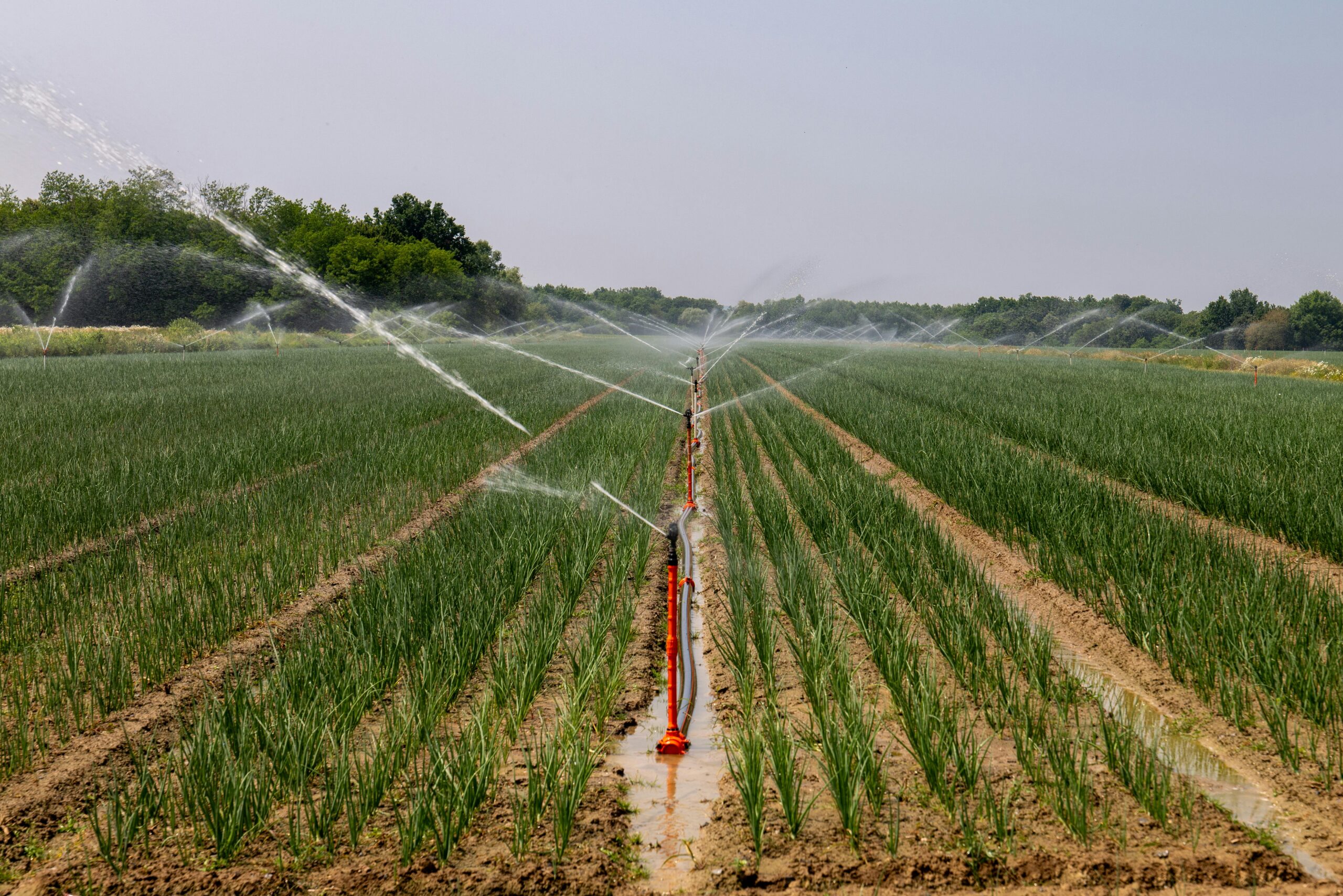
For crops unsuitable for drip irrigation, low-pressure micro-sprinkler systems offer significant water savings compared to traditional overhead irrigation. These systems apply water in fine droplets close to the ground, minimizing wind drift and evaporation losses. They’re particularly effective for orchards, vineyards, and certain vegetable crops that benefit from some canopy wetting without the excessive water waste of conventional sprinklers.
Farmers implementing these precision technologies consistently report water savings ranging from 30% to 60% compared to flood irrigation methods, while often achieving superior yields due to more consistent moisture availability and reduced plant stress. The ability to apply water, nutrients, and amendments with surgical precision transforms irrigation from a blunt instrument into a refined agricultural tool.
🌱 Soil Health and Water Retention
Healthy soil acts as a natural water reservoir, storing moisture during irrigation or rainfall and releasing it gradually to plant roots over time. Improving soil structure and organic matter content represents one of the most cost-effective water conservation strategies available, yet it’s frequently overlooked in favor of more technologically sophisticated approaches.
Organic matter—decomposed plant and animal materials—acts like a sponge within soil, dramatically increasing water-holding capacity. Research demonstrates that each 1% increase in soil organic matter enables soil to retain approximately 20,000 additional gallons of water per acre. Building organic matter through cover cropping, compost application, and reduced tillage creates compounding benefits over time, with soil water retention improving progressively with each growing season.
Conservation Tillage Practices
Reducing or eliminating tillage preserves soil structure, minimizes erosion, and maintains the network of pores and channels that allow water infiltration and retention. No-till and minimum-tillage systems leave crop residues on field surfaces, creating protective mulch layers that reduce evaporation, moderate soil temperatures, and increase organic matter accumulation. These practices have proven especially valuable in semi-arid regions where every millimeter of rainfall must be captured and conserved.
Strip-till techniques offer a middle ground, disturbing only narrow bands where seeds are planted while leaving the remainder of field surfaces protected. This approach provides benefits of residue cover while allowing targeted soil preparation in root zones, making it suitable for crops that struggle in no-till systems or regions with cooler spring temperatures where surface residues might delay soil warming.
📊 Advanced Monitoring and Decision Support
The explosion of affordable sensing technologies and data analytics tools has revolutionized irrigation management. Soil moisture sensors buried at multiple depths provide real-time information about water availability in root zones, eliminating guesswork about when irrigation is actually needed. Weather stations and evapotranspiration models calculate crop water use based on temperature, humidity, wind, and solar radiation, enabling precise irrigation scheduling matched to atmospheric demand.
Remote sensing technologies using satellite imagery or drone-mounted cameras detect plant stress patterns across entire fields before visible symptoms appear. Vegetation indices calculated from multispectral imagery identify areas receiving insufficient or excessive water, allowing farmers to adjust irrigation systems with spatial precision. This technology proves particularly valuable for large operations where walking every field regularly becomes impractical.
Smart Irrigation Controllers
Modern irrigation controllers have evolved from simple timers into sophisticated decision-support systems. Weather-based controllers connect to internet-based meteorological services, automatically adjusting irrigation schedules based on recent rainfall and forecasted conditions. Soil moisture-based systems use buried sensors to trigger irrigation only when moisture levels drop below crop-specific thresholds, preventing both under and over-watering.
These smart systems typically reduce water use by 20-40% compared to timer-based scheduling while maintaining or improving crop performance. The technology has become increasingly accessible, with options ranging from residential-scale controllers costing a few hundred dollars to enterprise agricultural platforms managing thousands of acres through integrated sensor networks and predictive algorithms.
🌾 Crop Selection and Management Strategies
Choosing appropriate crops and varieties for local water availability represents a fundamental water conservation strategy. Drought-tolerant cultivars bred specifically for water-limited environments maintain productivity under moisture stress that would devastate conventional varieties. These improved genetics often incorporate deeper root systems, more efficient water use mechanisms, and enhanced recovery abilities following stress periods.
Crop rotation and diversification strategies distribute water demand temporally and spatially across farming operations. Alternating high and low water-demand crops prevents continuous depletion of soil moisture reserves and allows strategic allocation of limited water to crops during their most critical growth stages. This approach proves especially valuable where water availability varies seasonally or between years.
Deficit Irrigation Techniques
Regulated deficit irrigation intentionally applies less water than full crop requirements during specific growth stages when plants tolerate moisture stress with minimal yield impact. This sophisticated approach requires detailed knowledge of crop physiology but can reduce seasonal water use by 20-35% while maintaining 90-95% of potential yields. The technique works particularly well for tree crops, wine grapes, and certain vegetables where controlled stress may actually improve product quality.
Partial root zone drying represents an advanced deficit irrigation strategy where alternating sides of the root system receive irrigation while the other side experiences controlled drying. This triggers physiological responses that reduce plant water use and improve water use efficiency without the yield penalties associated with uniform deficit irrigation. The method requires specialized irrigation infrastructure but delivers impressive water savings for suitable crops.
💚 Integrated Water Management Systems
The most successful water-conserving farms implement multiple complementary techniques rather than relying on single solutions. Integrated systems combine precision irrigation technologies with soil health improvements, advanced monitoring, appropriate crop selection, and agronomic best practices. This holistic approach generates synergistic benefits where the combined effect exceeds the sum of individual interventions.
Rainwater harvesting and storage systems capture precipitation during wet periods for use during dry spells, reducing dependence on wells or municipal water supplies. Simple pond and reservoir systems work for many operations, while more sophisticated approaches include underground storage, aquifer recharge programs, and integrated multi-reservoir management that optimizes water allocation across diverse cropping systems.
Greywater and Recycling Systems
Progressive operations increasingly capture and treat agricultural runoff and processing water for reuse in irrigation. Constructed wetlands and biofilters remove contaminants while also providing wildlife habitat and aesthetic benefits. These systems transform potential pollutants into valuable water resources, closing loops within agricultural water cycles and reducing both freshwater demands and environmental discharge impacts.
Water quality monitoring becomes essential in recycling systems to ensure that accumulated salts, nutrients, or other constituents don’t reach levels harmful to crops or soils. Proper management of recycled water requires additional technical expertise but offers substantial water security benefits, particularly during drought periods when every alternative source becomes valuable.
🌍 Regenerative Agriculture and Water Conservation
Regenerative agriculture approaches view water conservation within broader ecosystem contexts, recognizing that healthy agricultural landscapes naturally regulate water cycles more effectively than degraded systems. Practices like integrating perennial crops, establishing windbreaks and riparian buffers, and maintaining diverse plant communities create resilient agricultural ecosystems that capture, store, and cycle water efficiently while providing numerous co-benefits.
Agroforestry systems that integrate trees with crops or livestock create multi-layered canopies that reduce wind speeds, moderate microclimates, and improve water infiltration. Tree roots access deep soil moisture unavailable to annual crops while organic matter from leaf litter improves surface soil water retention. These complex systems often maintain productivity during droughts that devastate conventional monocultures, demonstrating the water security advantages of diversified agricultural landscapes.
🚀 The Future of Water-Smart Agriculture
Emerging technologies promise to further transform agricultural water management in coming decades. Artificial intelligence and machine learning algorithms are being trained to optimize irrigation decisions based on vast datasets incorporating weather patterns, soil characteristics, crop responses, and economic factors. These systems will eventually make billions of micro-decisions autonomously, fine-tuning water applications with precision impossible through human management alone.
Genetic technologies including CRISPR gene editing accelerate development of drought-tolerant crop varieties with enhanced water use efficiency. These next-generation crops may incorporate characteristics from wild relatives or entirely novel traits that dramatically reduce water requirements while maintaining or improving yields. As these technologies mature and gain regulatory approval, they’ll provide farmers with unprecedented options for producing food in water-limited environments.
Scaling Water Conservation Globally
The challenge moving forward involves disseminating water-conserving practices from innovative early adopters to mainstream agricultural communities worldwide. This requires not only technological transfer but also supporting policies, financing mechanisms, education programs, and cultural shifts in how societies value and price water resources. Government incentive programs, water pricing reforms, and agricultural extension services all play crucial roles in accelerating adoption of water-efficient practices.
Developing regions facing the most severe water constraints often lack infrastructure and capital to implement advanced conservation technologies. Appropriate technology approaches that adapt conservation principles to local resources, knowledge systems, and economic realities become essential. Simple improvements in traditional practices—like precise land leveling for flood irrigation or transitioning from continuous to intermittent flooding in rice paddies—can generate substantial water savings without requiring expensive equipment or extensive technical training.
🌟 Taking Action Toward Water-Efficient Farming
Farmers considering transitions toward water-conserving agriculture should begin with comprehensive assessments of current water use patterns, identifying the most significant loss pathways and inefficiencies. Simple interventions like repairing leaks, improving irrigation scheduling, or adding organic amendments to problem soils often deliver quick wins that build momentum and generate resources for more substantial investments.
Connecting with local agricultural extension services, irrigation districts, conservation organizations, and innovative neighboring farms provides valuable knowledge and support during transitions. Many regions offer technical assistance programs, cost-share funding, and demonstration projects that reduce both the financial risks and learning curves associated with adopting new practices. Success in water conservation rarely comes from isolated efforts—collaborative learning and shared experiences accelerate progress substantially.
The imperative for water-conserving agriculture grows stronger each year as climate change, population growth, and competing demands strain freshwater resources globally. Farmers implementing these techniques position themselves not only as environmental stewards but as business-savvy operators adapting proactively to inevitable water constraints. The transition toward water-smart agriculture represents neither sacrifice nor compromise but rather an evolution toward farming systems that prove more profitable, resilient, and sustainable across economic, environmental, and social dimensions. Every drop saved, every improvement in soil health, and every precision technology adopted moves agriculture closer to a future where food security and water security advance together rather than competing for limited resources.