
Anúncios
The way we live in cities is on the brink of transformation. Circular housing ecosystems promise sustainable, waste-free urban environments that redefine modern living.

🌱 Understanding Circular Housing: A Paradigm Shift in Urban Design
Traditional urban housing models follow a linear pattern: extract resources, build structures, use them, and eventually demolish them, creating massive waste streams. Circular housing ecosystems challenge this outdated approach by integrating principles of circular economy into residential design and operation. This revolutionary concept reimagines buildings as living organisms that continuously regenerate resources, minimize waste, and create value throughout their entire lifecycle.
Anúncios
At its core, circular housing focuses on closing material loops, maximizing resource efficiency, and creating symbiotic relationships between buildings, residents, and the surrounding environment. These ecosystems treat waste as a resource, energy as something to be shared and regenerated, and buildings as adaptable structures that evolve with changing needs rather than becoming obsolete.
The urgency for this transformation cannot be overstated. The construction industry accounts for approximately 40% of global carbon emissions and generates nearly one-third of all waste worldwide. With urban populations expected to reach 68% of humanity by 2050, conventional building practices simply cannot sustain this growth without catastrophic environmental consequences.
Anúncios
🏗️ Core Principles Driving Circular Housing Innovation
Several fundamental principles distinguish circular housing ecosystems from traditional developments. Understanding these foundations helps illuminate why this approach represents more than incremental improvement—it’s a complete reimagining of urban living.
Design for Disassembly and Adaptability
Circular housing begins at the design phase, where architects and engineers create buildings with their eventual transformation or disassembly in mind. Materials are selected not just for their immediate performance but for their potential reuse. Modular construction techniques allow spaces to be reconfigured as families grow, shrink, or change their needs, extending building lifespans indefinitely.
Connections between building components use mechanical fasteners rather than permanent adhesives, enabling non-destructive disassembly. Material passports—digital records documenting every component in a building—ensure future generations know exactly what resources are available when structures are eventually repurposed.
Resource Regeneration Instead of Consumption
Circular housing ecosystems actively regenerate resources rather than merely consuming them more efficiently. Integrated systems capture rainwater, treat greywater for reuse, and return nutrients from organic waste to urban agriculture systems. Solar panels, wind turbines, and geothermal systems generate more energy than buildings consume, with excess electricity shared across community microgrids.
These regenerative systems transform housing from passive consumption centers into productive nodes within urban metabolisms. Residents become prosumers—simultaneously producing and consuming resources—fundamentally altering their relationship with utilities and environmental impact.
Community-Centric Sharing Economies
Physical infrastructure alone cannot create truly circular systems. The social dimension proves equally critical, with shared resources and collaborative consumption reducing individual ownership requirements. Community workshops equipped with tools, maker spaces, shared vehicles, and collective amenities reduce redundancy while fostering social connections.
Digital platforms facilitate peer-to-peer sharing of goods, skills, and spaces within housing communities. What one household rarely uses—from power tools to party supplies—becomes available to neighbors, dramatically reducing the material footprint of each resident while building social capital.
🌍 Real-World Pioneers: Circular Housing in Action
While circular housing might sound utopian, numerous projects worldwide demonstrate its viability, offering valuable lessons and inspiration for future developments.
Brummen’s Circular Pavilion: The Netherlands’ Living Laboratory
In the Dutch municipality of Brummen, a remarkable pavilion constructed entirely from borrowed and bio-based materials showcases circular principles. Every component—from structural elements to interior finishes—carries a material passport and remains the property of original manufacturers who will reclaim materials when the building’s current function ends.
This project pioneered the “buildings as material banks” concept, demonstrating that structures need not own their components. Instead, manufacturers retain ownership and responsibility, incentivizing durable design since they’ll eventually recover their materials for reuse elsewhere.
Urban Rigger: Copenhagen’s Floating Student Housing
Copenhagen’s innovative Urban Rigger project transformed recycled shipping containers into floating student housing communities. These modular structures demonstrate adaptive reuse while addressing urban housing shortages without consuming valuable land. The containers’ inherent modularity allows easy reconfiguration, and their waterfront location integrates natural cooling systems that reduce energy consumption.
Beyond physical innovation, Urban Rigger creates intentional communities where shared facilities and common areas foster collaboration and resource sharing among residents, embodying the social dimensions of circular living.
PARK 20|20: A Cradle-to-Cradle Business Park
While technically commercial rather than residential, Amsterdam’s PARK 20|20 offers crucial insights applicable to housing. This development requires all buildings to achieve Cradle to Cradle certification, ensuring materials are either safely biodegradable or infinitely recyclable. The project demonstrates how circular principles scale across entire districts, with shared infrastructure and coordinated material flows creating efficiencies impossible in isolated buildings.
⚡ Technology Enabling the Circular Housing Revolution
Advanced technologies accelerate circular housing’s transition from niche experiments to mainstream reality, making what was once prohibitively complex or expensive increasingly accessible.
Digital Twins and Building Intelligence
Digital twin technology creates virtual replicas of physical buildings, continuously updated with real-time data from sensors monitoring everything from structural integrity to energy flows. These digital models optimize building performance, predict maintenance needs before failures occur, and document material compositions for eventual disassembly.
Machine learning algorithms analyze patterns across entire housing communities, identifying opportunities for resource sharing and efficiency improvements that humans might miss. Smart systems automatically balance energy generation and consumption across microgrids, adjusting in real-time to weather, occupancy, and pricing signals.
Advanced Materials Breaking Circular Barriers
Material science innovations remove traditional barriers to circular construction. Bio-based materials like mycelium insulation, hempcrete, and cross-laminated timber offer performance matching conventional materials while remaining fully biodegradable. Self-healing concrete extends structural lifespans while reducing maintenance requirements and resource consumption.
Phase-change materials embedded in walls store thermal energy, reducing heating and cooling needs. Transparent solar panels generate electricity while serving as windows, transforming building envelopes from passive barriers into energy-generating skins.
Blockchain for Material Tracking and Sharing
Blockchain technology creates immutable records of material origins, compositions, and ownership, essential for circular economies where materials constantly circulate. Smart contracts automatically execute transactions when materials are borrowed, used, or returned, reducing friction in sharing economies.
These distributed ledgers enable material marketplaces where demolished buildings’ components automatically list for sale, connecting suppliers with projects needing specific materials. This infrastructure makes reclaimed materials as accessible and reliable as virgin resources.
💡 Economic Models Reshaping Housing Finance
Circular housing requires new economic models since traditional real estate finance assumes ownership of depreciating assets. Innovative approaches align financial incentives with circular principles, making sustainable housing economically attractive.
Product-as-a-Service for Building Components
Rather than purchasing building systems outright, residents or developers lease them as services. Manufacturers retain ownership of heating systems, solar panels, or kitchen appliances, maintaining responsibility for performance, repairs, and eventual material recovery. This model incentivizes durability and efficient design since manufacturers bear lifecycle costs.
For residents, this eliminates large upfront costs and maintenance headaches while ensuring access to continuously updated technology. When better solutions emerge, manufacturers upgrade leased components rather than forcing residents to discard functional systems.
Community Land Trusts and Cooperative Ownership
Separating land ownership from building ownership through community land trusts enables long-term stewardship aligned with circular principles. Trusts maintain land for community benefit while residents own buildings, ensuring affordability across generations and preventing speculative development that prioritizes short-term profits over sustainability.
Housing cooperatives where residents collectively own and manage properties naturally align with circular principles, making long-term investments that individual homeowners might avoid due to mobility or financial constraints.
🌿 Environmental and Social Returns Beyond Sustainability
Circular housing ecosystems deliver benefits extending far beyond reduced environmental impact, creating positive social, economic, and health outcomes that justify investments even without environmental considerations.
Dramatic Reductions in Urban Ecological Footprints
Comprehensive circular housing developments can reduce carbon emissions by 80-90% compared to conventional construction while cutting waste generation by similar margins. Water consumption drops by 50-70% through closed-loop systems, and energy requirements frequently become negative as buildings generate surplus power.
These improvements compound across entire neighborhoods, creating urban districts that regenerate rather than degrade their surrounding environments. Green roofs and integrated agriculture increase urban biodiversity while mitigating heat island effects that make cities increasingly unlivable during heat waves.
Enhanced Quality of Life and Community Resilience
Beyond environmental metrics, circular housing demonstrably improves residents’ quality of life. Shared amenities and collaborative spaces combat urban isolation, creating stronger social networks that prove invaluable during emergencies. Integrated nature and biophilic design elements improve mental health and cognitive function while reducing stress.
Local resource generation increases community resilience against supply chain disruptions, energy price volatility, and climate impacts. When neighborhoods produce their own energy, food, and water, they become less vulnerable to external shocks that increasingly threaten conventional urban systems.
Economic Opportunities in the Circular Transition
The circular housing sector creates diverse employment opportunities, from material recovery specialists to community sharing coordinators. Local manufacturing of modular components and urban agriculture operations generate neighborhood-level economic activity rather than concentrating wealth in distant corporations.
Reduced utility costs and shared amenities decrease residents’ living expenses, improving affordability even as construction quality increases. Over building lifespans measured in generations rather than decades, circular approaches prove economically superior despite potentially higher upfront investments.
🚧 Overcoming Barriers to Widespread Adoption
Despite compelling advantages, circular housing faces significant obstacles preventing rapid mainstream adoption. Understanding these barriers helps identify leverage points for accelerating the transition.
Regulatory and Code Challenges
Building codes developed for conventional construction often inadvertently prohibit circular innovations. Regulations requiring specific materials, prohibiting greywater reuse, or mandating connections to centralized utilities can block circular approaches. Material passports and design-for-disassembly remain uncommon requirements, removing incentives for circular design.
Progressive jurisdictions are updating regulations to enable rather than obstruct circular housing, but most regions lag behind innovation. Advocacy and demonstration projects help regulators understand that circular approaches can meet safety and performance standards while delivering superior outcomes.
Skills Gaps and Industry Inertia
Construction industries worldwide optimize for conventional practices, with established supply chains, trained workforces, and proven processes. Shifting to circular approaches requires retraining workers, developing new supplier relationships, and accepting higher initial risks as teams climb learning curves.
Educational institutions increasingly incorporate circular principles into architecture and engineering curricula, but transforming the existing workforce requires accessible training programs and financial support during transitions.
Cultural Expectations and Consumer Mindsets
Perhaps the deepest barrier is cultural: expectations that homeownership means absolute control over private space, that newer always means better, and that individual ownership surpasses shared access. Circular housing challenges these assumptions, requiring residents to embrace collaboration, accept leased components, and value adaptability over permanence.
Shifting these mindsets requires compelling examples demonstrating that circular living enhances rather than diminishes quality of life. As younger generations increasingly value experiences over ownership and prioritize sustainability, cultural barriers may dissolve faster than anticipated.
🔮 The Next Decade: Scaling Circular Housing From Niche to Norm
The coming decade will determine whether circular housing remains a niche pursuit or becomes standard practice. Several trends suggest accelerating adoption may transform urban landscapes faster than skeptics anticipate.
Climate urgency is forcing governments worldwide to mandate dramatic emissions reductions, with building sectors facing particularly aggressive targets. These regulations will make conventional construction increasingly difficult while favoring circular approaches that dramatically reduce carbon footprints.
Simultaneously, technology costs continue falling while capabilities expand. Solar energy, battery storage, and smart building systems that once seemed futuristic luxuries become cost-effective necessities. Material science breakthroughs make bio-based alternatives competitive with conventional materials on both performance and price.
Perhaps most importantly, successful demonstration projects are multiplying, providing proof points and best practices that reduce risk for subsequent developments. As circular housing transitions from experimental to proven, capital flows will follow, enabling scaling that drives costs down further through economies of scale and learning effects.
🎯 Actionable Steps Toward Circular Urban Futures
Creating circular housing ecosystems requires coordinated action across multiple stakeholders, from policymakers to individual residents. Everyone has roles to play in accelerating this essential transition.
Policymakers should prioritize updating building codes to enable circular innovation while mandating material transparency and end-of-life planning for new construction. Incentives like tax credits, expedited permitting, or density bonuses can offset circular housing’s learning curve costs. Public housing agencies can lead by example, incorporating circular principles into new developments.
Developers and architects should educate themselves on circular principles, partner with innovative material suppliers, and incorporate sharing amenities into new projects. Even incremental steps—material passports, modular designs, or community workshop spaces—move the industry toward circularity while building expertise for more ambitious future projects.
Individual residents can support circular housing by choosing developments incorporating these principles, participating actively in sharing systems, and advocating for circular approaches in their communities. Consumer demand signals to developers and policymakers that markets exist for circular housing, encouraging expanded supply.
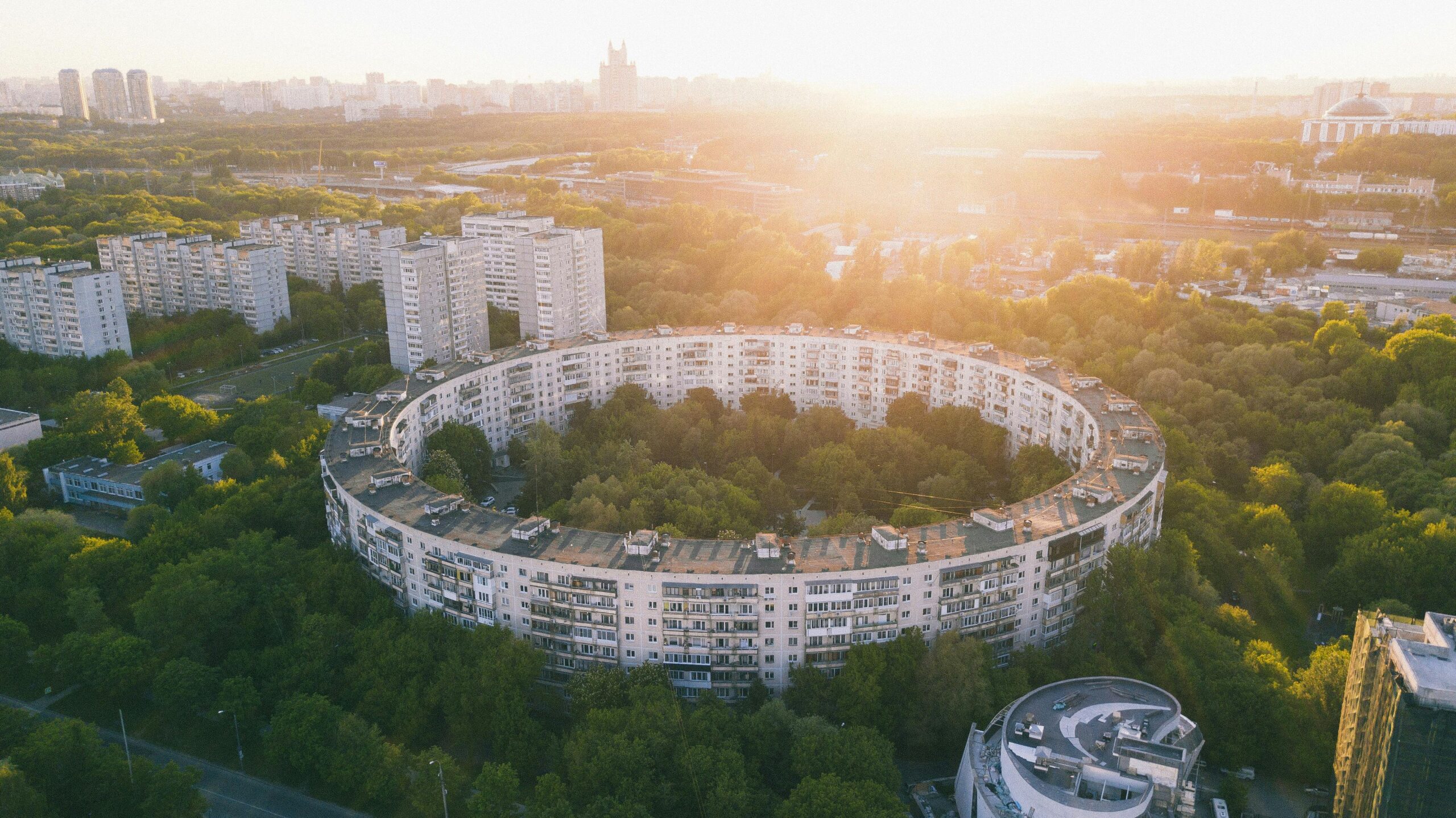
🌟 Reimagining Urban Life Through Circular Systems
Circular housing ecosystems represent far more than environmental improvements or technical innovations. They offer nothing less than a reimagining of urban life itself—how we relate to resources, to our neighbors, and to the places we call home.
In circular communities, housing transforms from isolated consumption units into connected nodes within regenerative systems. Buildings become productive participants in urban metabolisms rather than passive resource drains. Residents shift from anonymous consumers to engaged community members collaborating to enhance shared prosperity.
This transformation addresses not just environmental crises but social fragmentation and economic inequality that plague modern cities. Circular housing creates the physical and social infrastructure for human flourishing within planetary boundaries—the essential foundation for sustainable urban futures.
The transition won’t happen overnight, and challenges remain formidable. Yet the combination of environmental necessity, technological enablement, economic opportunity, and demonstrated success creates unprecedented momentum. Circular housing is moving from visionary concept to practical reality, promising to revolutionize urban living for generations to come. The future of housing isn’t just sustainable—it’s circular, regenerative, and remarkably hopeful.